
Copyrights
Copyright © 2020 by Centre for Labour Research All rights reserved. No part of this publication may be reproduced, distributed, or transmitted in any form or by any means, including photocopying, recording, or other electronic or mechanical methods, without the prior written permission of the publisher, except in the case of brief quotations embodied in […]
Bibliography
Akdere, M., D. Russ-Eft, and N. Eft. 2007. The Islamic worldview of adult learning in the workplace: Surrendering to god. Human Resources Abstracts. 42 (3):355–63. Al-Faruqi, I. R., and G. Al-Banna. 1984. Towards Islamic labour & unionism: Three papers. Cairo: International Islamic Confederation of Labour. ˙ Bayat, A. 1992. Work ethics in Islam: A comparison […]
Notes
We believe our understanding of the Quran and Sunnah will keep evolving to address modern day challenges and we hope to revise this work in the years to come. Names of the Prophets Throughout this work, we have used the Arabic names of the Prophets. Although not all of the Prophets […]
Chapter 5 Labour Inspection
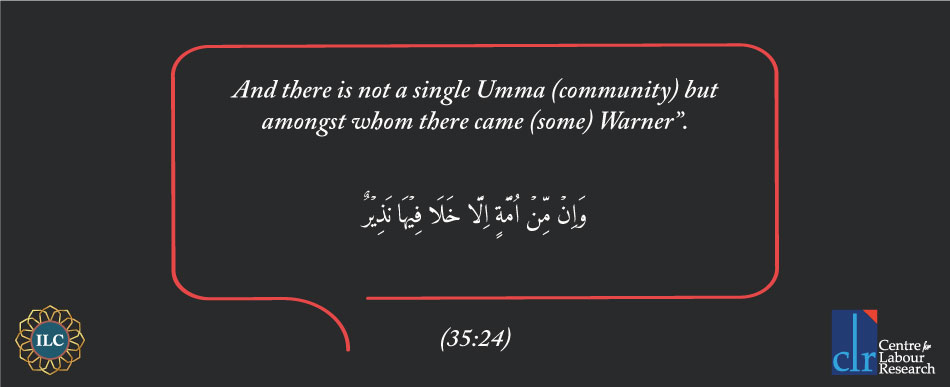
Enterprises and workplaces, operating under the provisions of this Labour Code, shall be subject to labour inspection.[1] The labour inspectors shall have the following functions and powers: to supply technical information and advice to employers and workers concerning the most effective means of complying with the legal provisions;[2] to secure the enforcement of the legal […]
Chapter 4 Working Hours and Leaves
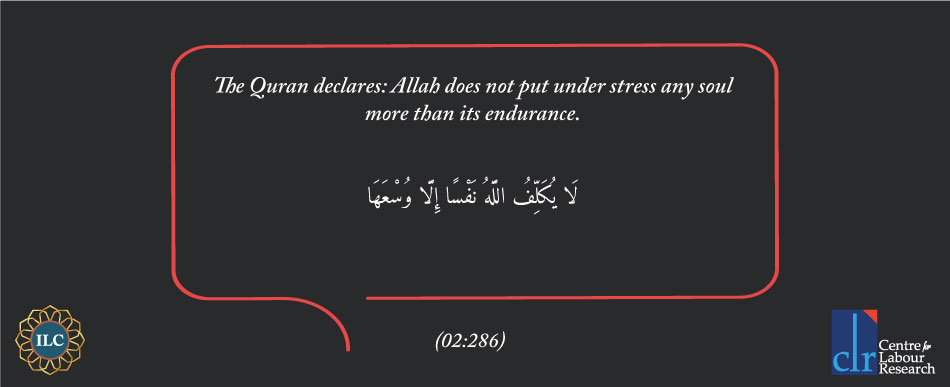
The normal working hours for a worker shall not exceed 8 hours per day and 40 hours per week.[1] The employer may require a worker to perform work for more than normal working hours on one or more days of the week provided that total working hours inclusive of overtime shall not exceed 56 hours […]
Chapter 3 Wage
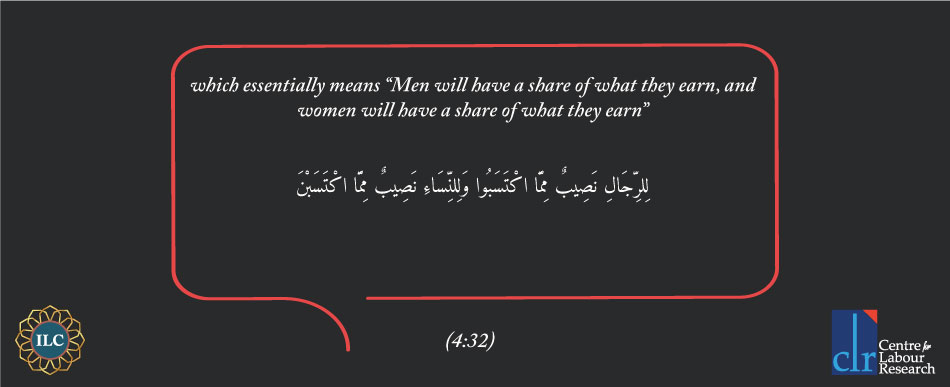
An employer shall pay the wages/salaries to the workers without any discrimination.[1] Wages shall be set in accordance with the prevalent market standard for a similarly situated occupation and comply with all prevailing laws and regulations. Minimum Wages shall be determined[2] through Minimum Wage Council in such a manner that these satisfy the basic needs […]
Chapter 2 Employment Contracts
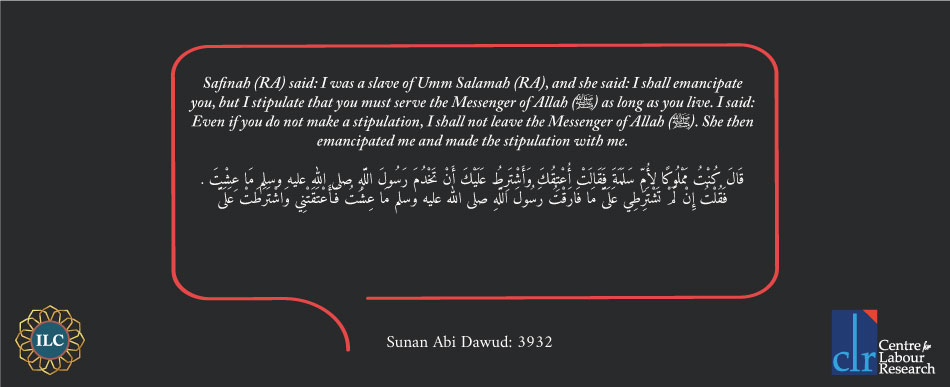
Subject to the provisions of this Labour Code, an employment contract may be oral or written and for a definite[1] or indefinite period[2], or the performance of a specific[3][4] “Employment Contract” means a contract of service whether expressed or implied and expressed orally or in writing.[5] Every employment contract shall contain all such particulars as […]
Social Security
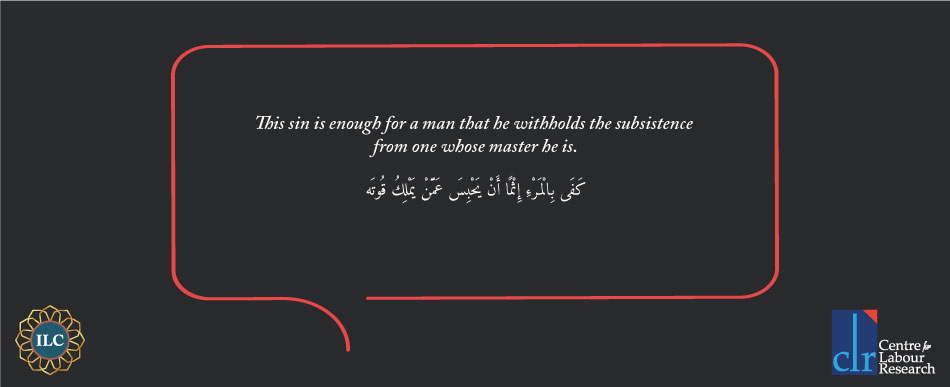
A registered worker shall have access to[1]: Unemployment Benefit[2] Old-Age Benefit[3] Employment Injury/Invalidity Benefits[4] Survivors’ Benefits [1] Islam gives importance to the provision of social security benefits for workers by the state. Surah Quraish describes the essential traits of Allah: “So they should worship the Lord of this (Sacred) House (Ka’ba, to give […]
Occupational Safety and Health
For the purpose of this chapter, the term health, in relation to work, indicates not merely the absence of disease or infirmity; it also includes the physical and mental elements affecting health which are directly related to safety and hygiene at work.[1] An employer shall ensure safety, health and welfare at the workplace for all […]
Freedom of Association
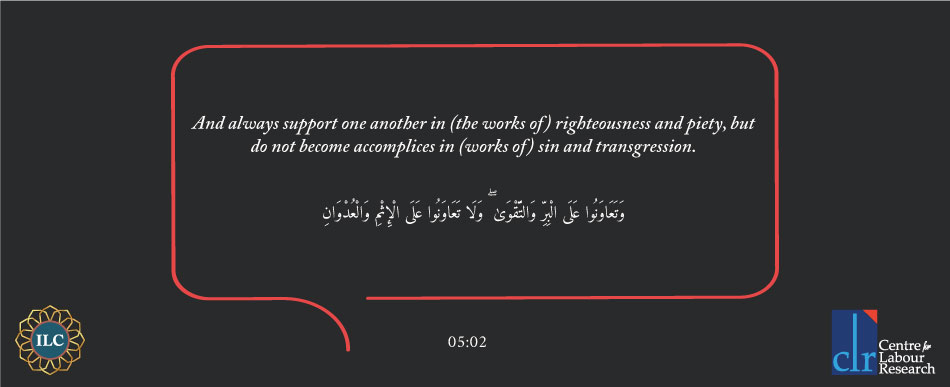
Workers and employers, without any distinction whatsoever, shall have the right to establish and to join organisations of their own choosing without previous authorisation.[1] In exercising the rights, workers and employers and their respective organisations shall respect the law of the land.[2] Unfair Labour practices on the part of the employers. No employer shall: impose […]